Monkey D. Luffy
King of the Pirates · Gear 5 · Joy Boy Reincarnation · Nika · Captain of the Straw Hat Pirates · Fifth Emperor of the Sea
Grand Line · New World · Origin: Foosha Village, East Blue — grew up on Mount Colubo under Curly Dadan
anitroves.com/monkey-d-luffyAbout
Monkey D. Luffy is the most beloved protagonist in the history of shonen manga and the beating heart of One Piece — the highest-selling manga series of all time. Born in Foosha Village in the East Blue and raised on Mount Colubo by the bandit Curly Dadan, Luffy grew up in the shadow of two towering figures: his grandfather Vice Admiral Monkey D. Garp, a Marine hero who wanted him to be a great soldier, and the red-haired pirate Shanks, who gave him both his iconic straw hat and the dream that would define his entire life. At age seven, Luffy accidentally ate the Gomu Gomu no Mi — a Devil Fruit that turned his body into rubber — and made a promise to Shanks: one day he would become King of the Pirates. What Eiichiro Oda then constructed over the course of a quarter-century is one of the most ambitious, emotionally charged, and consistently surprising long-form narratives in all of fiction. Luffy does not become King of the Pirates by being the smartest, the most strategic, or the most powerful person in every room. He becomes it by being the most himself — relentlessly, infectiously, impossibly so. He eats what he wants, sleeps when he wants, fights who he chooses, refuses to calculate odds, and draws people to him with a gravity that the series eventually reveals is not metaphor but literal cosmic force: the awakening of his Devil Fruit as the Hito Hito no Mi, Model: Nika — the Sun God — transforms him into the embodiment of freedom and joy that the world has been waiting for. Gear 5 did not change who Luffy was. It revealed what he had always been.
Experience

King of the Pirates — Yonko-Level Sovereign, Grand Line
Straw Hat Pirates (麦わらの一味) — Straw Hat Grand Fleet · Grand Line · New World
Post-Wano Country Arc · Active · Present
New World · Pirate sovereignty, crew command, Yonko territory, inter-faction diplomacy
The title Luffy declared he would hold from the day he met Shanks — and spent the entire series proving he was serious about. After the defeat of Kaido and Big Mom at Wano Country, the world recognised Luffy as one of the Four Emperors of the Sea: a Yonko whose territory, crew, and Grand Fleet rival any force on the ocean. His ascent to King of the Pirates following the Egghead Incident and the full awakening of his Gear 5 — the Sun God Nika — made the title literal rather than merely political. As captain of the Straw Hat Pirates and commander of the Grand Fleet (5,600 subordinate fighters spanning ten allied crews), Luffy presides over a pirate coalition of historical scale. He does not preside deliberately; he leads by being exactly who he is and watching the world rearrange itself around him.
Captain — Straw Hat Pirates (麦わらの一味)
Straw Hat Pirates — Self-founded · Nine core crew members · Thousand Sunny
East Blue, Romance Dawn Arc · Ongoing · Active operational command
East Blue → Grand Line → New World · All major seas and islands
Luffy founded the Straw Hat Pirates with a crew of zero and a grand vision he could not yet articulate beyond wanting to find people who shared it. Over the course of the series he recruited ten core members — Roronoa Zoro, Nami, Usopp, Sanji, Tony Tony Chopper, Nico Robin, Franky, Brook, and Jinbe — each of whom joined not because Luffy asked but because he showed up at the moment of their deepest need and refused to leave without them. The crew’s operational record across the Grand Line and New World is unparalleled: they have defeated Warlords of the Sea, challenged Yonko, navigated Skypiea and the underwater nations, survived the Sabaody Archipelago, and emerged from Wano as the dominant pirate power in the New World. Luffy’s captaincy is not administrative — he issues no complex orders, maintains no formal hierarchy, and often has no operational plan at all. The crew works because of him, not despite this.
Gear 5 / Sun God Nika — Mythical Zoan Awakening
Hito Hito no Mi, Model: Nika (ヒトヒトの実 幻獣種 モデル:ニカ) — Mythical Zoan · World Government classified
Awakened during battle against Kaido, Onigashima Roof · Active, post-Wano
Global — wherever Luffy chooses to fight · Reality-warping rubbery combat
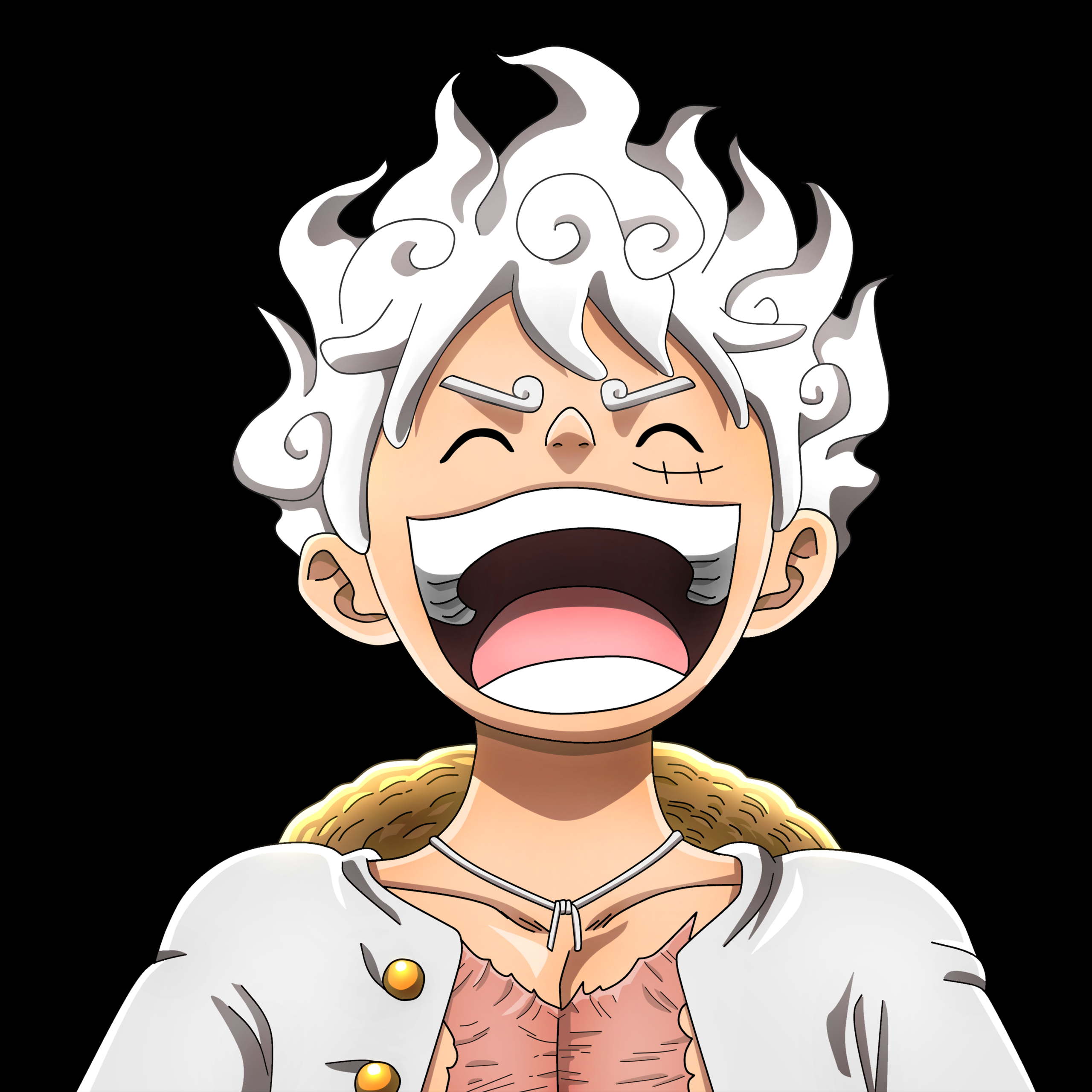
The true identity of the Devil Fruit the World Government had classified and suppressed for 800 years as the “Gomu Gomu no Mi” — the rubber-rubber fruit — is the Hito Hito no Mi, Model: Nika: a Mythical Zoan fruit whose awakening transforms the user into the legendary Sun God Nika, the warrior of liberation said to make people smile wherever he appears. In Gear 5, Luffy’s hair and clothes turn white, his eyes develop fiery irises, and the laws of physics bend to match whatever he imagines — he can turn the environment rubbery, inflate opponents, pull clouds from the sky, and laugh through combat with a giddy power that operates on cartoon logic rather than martial discipline. The awakening is powered by the “drums of liberation” — a heartbeat audible to those nearby, which increases in tempo as Luffy’s joy in battle grows. It is the series’ definitive statement: Luffy’s freedom is not a metaphor. It is a force of nature.

Combatant — Marineford War (Summit War) · Rescue of Portgas D. Ace
Allied with Whitebeard Pirates · Impel Down breakout · Marineford battlefield
Summit War of Marineford · Pre-timeskip · Single operational engagement
Impel Down → Marineford · Marine Headquarters · Full-scale war zone
The Marineford arc is Luffy at his most raw: operating on zero plan, zero backup, and pure emotional desperation to reach his brother Portgas D. Ace before his public execution. He broke into Impel Down — the world’s most secure prison — escaped with a group of the world’s most dangerous criminals, arrived at Marineford mid-war, and fought through the combined Marine forces including multiple Admirals. He did not save Ace; Ace died shielding Luffy from Akainu’s magma fist. The failure — and the complete psychological collapse that followed — is the series’ pivot point: the end of Luffy’s childhood and the beginning of the shinobi who understood, for the first time, that wanting something with everything you have is not enough to keep it. The two years of training that followed were a direct response to this failure.
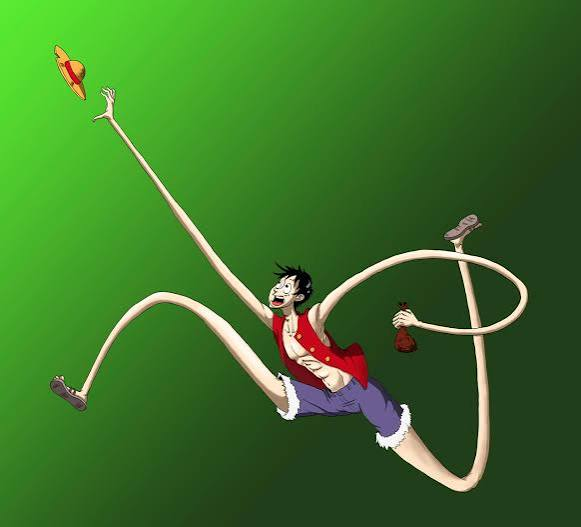
Rubber Man — Gomu Gomu no Mi User (Hito Hito no Mi, Model: Nika)
Devil Fruit user — consumed age 7 · Shanks’ ship, East Blue · World Government classified
Age 7 — Awakening at Onigashima (Wano) · Approximately 12 years of active Devil Fruit use
Internal — Luffy’s physiology · Paramecia (apparent) → Mythical Zoan (true nature)
Luffy accidentally ate what he believed was the Gomu Gomu no Mi at age seven from a chest aboard Shanks’ ship, transforming his body permanently into rubber and costing him the ability to swim — the sailor’s worst possible handicap. For most of the series, his relationship with the fruit was developmental: learning to weaponise elasticity through Gears (Gear Second, Third, Fourth) as progressively more powerful combat states. The revelation that the fruit was not a Paramecia at all, but a Mythical Zoan carrying the consciousness and legacy of Joy Boy — the freedom-fighter who made the world a promise 800 years ago — recontextualised Luffy’s entire journey. He was not just a boy who ate a rubber fruit and wanted to be a pirate. He was the person the world had been waiting for since the Void Century.
Education
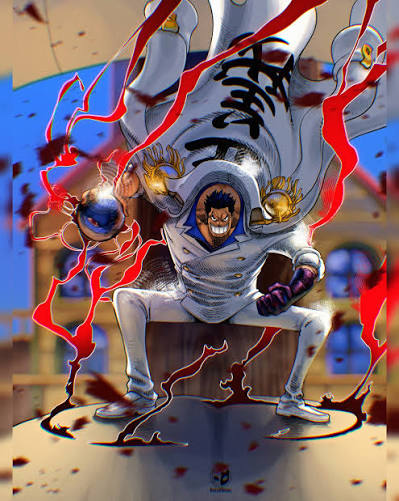
Combat Foundations — Monkey D. Garp (Grandfather · Marine Hero)
Monkey D. Garp (モンキー・D・ガープ) — Vice Admiral · Hero of the Marines · Luffy’s grandfather
Childhood through departure from East Blue · Training on Mount Colubo · Survival-focused curriculum
Mount Colubo, East Blue · Physical conditioning, combat basics — involuntary and unconventional
Pirate Worldview & Straw Hat Inheritance — Shanks (Red-Haired)
Shanks (シャンクス) — Yonko · Red-Haired Pirates Captain · One of the Four Emperors of the Sea
Foosha Village childhood · Shanks’ departure from East Blue · Foundational mentorship period
Foosha Village, East Blue · Philosophy of freedom, the will to be a pirate, the straw hat
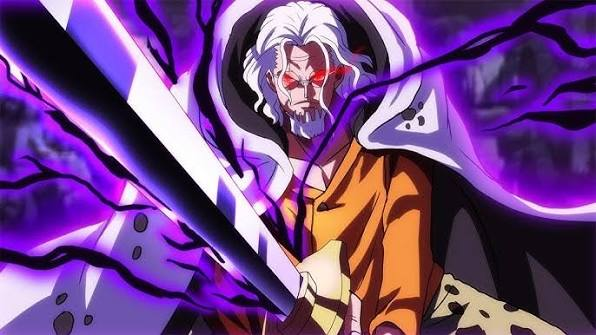
Haki Mastery — Silvers Rayleigh (Dark King · Roger Pirates First Mate)
Silvers Rayleigh (シルバーズ・レイリー) — Dark King · First Mate of the Roger Pirates · Pirate legend
Post-Marineford timeskip · Two-year intensive training · Rusukaina Island
Rusukaina Island · Observation Haki, Armament Haki, Conqueror’s Haki foundations
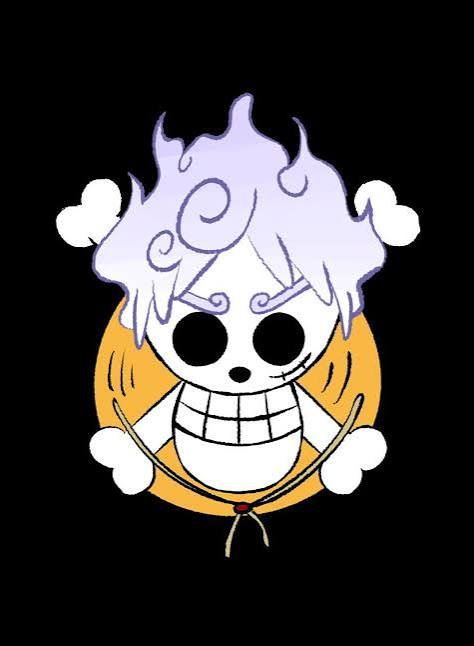
Self-Trained Combat Development — Gear 2, 3, 4, and 5 Techniques
Self-developed in field conditions · Inspired by observation of opponent techniques and accumulated combat necessity
Gear 2 (Enies Lobby) · Gear 3 (pre-Enies Lobby) · Gear 4 (Dressrosa) · Gear 5 (Wano)
Grand Line · Technique development through live combat rather than structured training
Skills
Monkey D. Luffy’s skill profile is one of the most distinctive in all of shonen manga because his power development is systematically tied to combat desperation rather than structured training — he invents new techniques mid-fight by necessity, and those techniques then become permanent additions to his arsenal. His baseline ability is the Gomu Gomu no Mi (true name: Hito Hito no Mi, Model: Nika) — a Devil Fruit that makes his body rubber with the additional property, in its awakened state, of extending that rubbery physics to his environment. His Gear system represents the arc of his combat evolution: Gear Second pumps blood at accelerated rates to generate heat and speed; Gear Third inflates bones to produce giant-limb impacts; Gear Fourth compresses armament Haki into specific body parts for elastic power strikes (Boundman, Tankman, Snakeman being the three primary forms); Gear Fifth is the awakened Zoan transformation — the Sun God Nika state — which abandons conventional combat physics entirely and operates on instinct, joy, and imagination. His Conqueror’s Haki is among the most powerful ever recorded — capable of infusing weapons and limbs with the force of his will (a technique only a handful of people in history have achieved), and of unleashing simultaneous ambient bursts that incapacitate entire crowds. His Observation Haki reaches its apex in “Future Sight” — the ability to see a short distance into the future, first manifested during the Katakuri fight and the most decisive factor in his combat at that level. His Armament Haki evolved from standard hardening to the advanced “Ryou” technique — sending Haki through objects rather than coating their exterior, allowing internal damage that bypasses physical defences. His single consistent weakness is water: as a Devil Fruit user he cannot swim and is significantly weakened when submerged. His greatest asset beyond his power is his absolute refusal to calculate survival odds — he commits completely to every fight regardless of what the mathematics say, and this single-minded commitment has reversed more apparently losing situations than any technique he possesses.
Languages
Common Tongue (World Standard)
Native — the shared language of the One Piece world, spoken uniformly from East Blue to the New World; Luffy’s vocabulary is famously limited and direct — he communicates in wants, names, and declarations rather than complex sentences, and this simplicity is consistently more effective than any elaborate speech
Animal Communication (Operational Fluency)
Functional — Luffy can communicate meaningfully with animals including Chopper (in human-point), the elephant Zunesha, and various island fauna; whether this is a latent Haki-adjacent ability or simply a function of his total absence of self-consciousness around non-human beings is unresolved by the series
The Voice of All Things (Passive · Incomplete)
Emergent ability — Luffy has demonstrated the ability to hear the “voice of all things” that Roger and Oden could also perceive: a form of deep Observation Haki that allows communication with Sea Kings, Poneglyphs, and living islands such as Zou; his access to this ability is instinctive and non-voluntary, appearing in moments of extreme emotional resonance rather than deliberate activation
Licenses & Certifications
Pirate Captain License — Straw Hat Pirates, Grand Line & New World
Straw Hat Pirates (麦わらの一味) · Self-founded · Crew of ten core members
Issued: Romance Dawn Arc, East Blue · Active through present day
Credential ID: STRAWHATS-CAPTAIN-LUFFY-001
Gear 5 Certification — Awakened Mythical Zoan, Hito Hito no Mi Model: Nika
Hito Hito no Mi, Model: Nika · Mythical Zoan · World Government classified fruit
Awakened: Onigashima Rooftop, Wano Country Arc · Active post-Wano
Credential ID: GEAR5-NIKA-LUFFY-001
Conqueror’s Haki (Haoshoku Haki) — Advanced Infusion Achieved
Haoshoku Haki (覇王色の覇気) · One in several million born with this ability · Advanced coating
First manifestation: Amazon Lily · Advanced infusion unlocked: Wano Country Arc
Credential ID: HAOSHOKU-HAKI-LUFFY-001
Yonko Status — Fifth Emperor of the Sea, Warlord Successor
Four Emperors (四皇) · Recognised post-Wano Country · World-scale pirate authority
Granted: Post-Wano Country Arc · Full Yonko recognition after Kaido defeat
Credential ID: YONKO-EMPEROR-LUFFY-001
Accomplishments
Historic First
Defeated Kaido — The Strongest Creature — and Liberated Wano Country
No pirate, Marine, or samurai had defeated Kaido in living memory; after a battle spanning multiple rounds across Onigashima, Luffy activated Gear 5 for the first time and defeated Kaido with a Bajrang Gun — a planet-scale Conqueror’s-infused Haki strike — ending 20 years of Wano’s suffering under Beast Pirates occupation
Combat Achievement
Defeated Charlotte Katakuri — Future Sight Duel, Mirror World
Whole Cake Island Arc · Katakuri was the first opponent in the series who could see into the future with Observation Haki; Luffy defeated him by developing Future Sight himself mid-fight, in a straight combat duel lasting hours — the arc’s most technically precise and emotionally satisfying battle
Strategic Achievement
Formed the Ninja-Pirate-Mink-Samurai Alliance — Orchestrated the Liberation of Wano
Luffy’s alliance with Law, the Mink Tribe, the Wano samurai, and multiple other factions created the operational coalition that made the Onigashima Raid possible — a multi-front assault against Kaido and Big Mom that succeeded despite a 1:30 numerical disadvantage at the start
Defining Act
Declared Joy Boy’s Return — Gear 5 Awakening Changes the World’s Balance
The awakening of the Hito Hito no Mi, Model: Nika at Wano was heard as drumbeats across the world; the Five Elders explicitly acknowledged that “Joy Boy has returned” — connecting Luffy to the 800-year-old figure who failed to liberate the world and promised to return to finish what he started
Legacy
Became King of the Pirates — Fulfilled the Promise Made the Day He Got the Straw Hat
The promise Luffy made to Shanks as a child — to surpass him, find the One Piece, and become King of the Pirates — was fulfilled not by becoming a different person but by becoming more completely himself than anyone thought possible; his title is not a position he was given but a recognition of what he already was
Similar Profiles

Seventh Hokage · Nine-Tails Jinchūriki · Child of Prophecy · Toad Sage
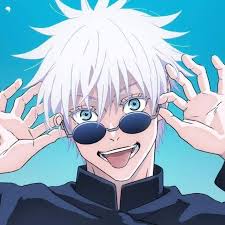
Special Grade Jujutsu Sorcerer · Professor at Tokyo Jujutsu High · Six Eyes Wielder
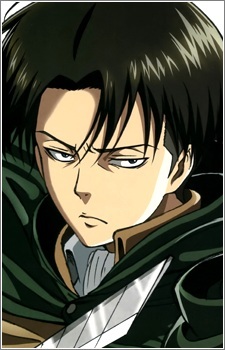
Humanity’s Strongest Soldier · Captain, Survey Corps · Ackerman Clan
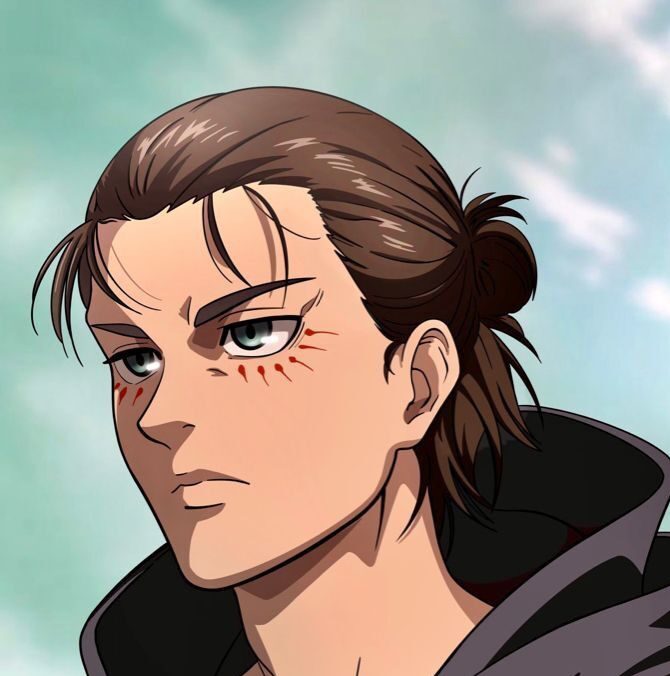
Attack Titan · Founding Titan · Architect of the Rumbling · Survey Corps
World’s Greatest Swordsman · Three Sword Style · Straw Hat Pirates · Asura
ANBU Captain · Akatsuki · Mangekyō Sharingan · Sacrificed Everything for Konoha
Prince of the Saiyans · Ultra Ego · Z Fighter · Dragon Ball Super
Legendary Saiyan Warrior · Protector of Earth · Ultra Instinct Master · Z Fighter
King of Curses · Highest-Ranked Cursed Spirit · Jujutsu Kaisen
Masked Man · Akatsuki Leader · Ten-Tails Jinchūriki
Legendary Shinobi · Co-Founder of Konohagakure · Six Paths Sage · Uchiha Clan Leader
Similar Profiles
Seventh Hokage · Nine-Tails Jinchūriki · Child of Prophecy · Toad Sage
Special Grade Jujutsu Sorcerer · Professor at Tokyo Jujutsu High · Six Eyes Wielder
Humanity’s Strongest Soldier · Captain, Survey Corps · Ackerman Clan
Attack Titan · Founding Titan · Architect of the Rumbling · Survey Corps
World’s Greatest Swordsman · Three Sword Style · Straw Hat Pirates · Asura
ANBU Captain · Akatsuki · Mangekyō Sharingan · Sacrificed Everything for Konoha
Prince of the Saiyans · Ultra Ego · Z Fighter · Dragon Ball Super
Legendary Saiyan Warrior · Protector of Earth · Ultra Instinct Master · Z Fighter
King of Curses · Highest-Ranked Cursed Spirit · Jujutsu Kaisen
Masked Man · Akatsuki Leader · Ten-Tails Jinchūriki
Legendary Shinobi · Co-Founder of Konohagakure · Six Paths Sage · Uchiha Clan Leader
Character Deep Dive
Monkey D. Luffy
モンキー・D・ルフィ · Character Profile
Physical Build & Appearance
Height
172 cm (5’8”) post-timeskip — lean and wiry rather than imposing; his physique belies his destructive capacity entirely. In Gear Fourth he becomes substantially larger as muscle mass expands under Haki compression. In Gear Fifth he returns to a normal scale but with white hair and dramatically expressive features.
Hair
Short, wild black hair — always dishevelled, frequently flattened under his iconic straw hat. In Gear Fifth the hair turns completely white and becomes even more dramatic in form. The contrast between his dark-haired baseline and white-haired Gear 5 form is one of the series’ strongest visual transformations.
Eyes
Dark brown, wide, and perpetually expressive — Luffy’s eyes communicate every emotional state with no filter. In Gear Fifth they develop the characteristic fiery white irises that recall illustrations of ancient gods. His expression in Gear 5 has a cartoon-like exaggerated quality that matches the transformation’s physics-defying nature.
Marks
A scar beneath his left eye — self-inflicted at age seven to prove toughness to Shanks’ crew — and the X-shaped scar across his chest from Akainu’s magma fist at Marineford. The chest scar is one of the series’ most emotionally charged visual elements: the permanent mark left by the battle where Ace died and Luffy nearly followed.
Attire
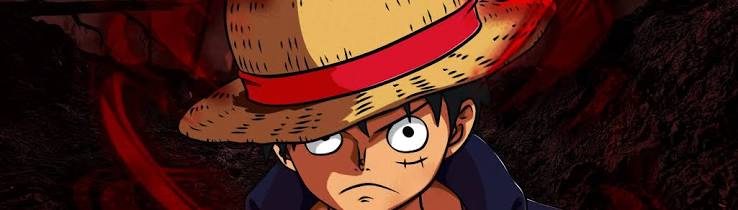
Red vest, blue shorts, and sandals in his pre-timeskip form; post-timeskip he switches to a red coat over an open shirt. His most iconic accessory is the straw hat — Shanks’ hat, passed down to him with the instruction to return it when he becomes a great pirate. In Gear Fifth the outfit turns white to match his hair and the transformation’s visual language.
Transformed States
Gear Second produces a steam-shrouded, red-flushed form with visible vascular acceleration. Gear Third produces specific giant limbs inflated to building scale. Gear Fourth (Boundman) wraps him in armament Haki with a dramatically muscled silhouette. Gear Fifth is the most visually distinctive — white hair, white outfit, fiery eyes, cartoon-elastic body that reshapes mid-fight.
Biography & Chronological History
Born in Foosha Village — Raised by Curly Dadan, Befriended by Shanks
Monkey D. Luffy was born in the small East Blue port town of Foosha Village to parents he would not know for years — his mother unknown, his father Monkey D. Dragon the Revolutionary Army’s supreme commander and the world’s most wanted man. He was raised on Mount Colubo under the bandit Curly Dadan at the instruction of his Marine grandfather Garp, alongside his sworn brothers Portgas D. Ace and later Sabo. His formative years were defined by three things: Garp’s brutal training (which Luffy endured and thrived on), Dadan’s grudging affection (which he accepted completely), and Shanks — the red-haired pirate who spent a year anchored at Foosha and whose presence permanently oriented Luffy toward the sea. At age seven, Luffy stabbed himself under the left eye to prove his toughness to Shanks’ crew. Shanks laughed at him. Luffy ate the Gomu Gomu no Mi by accident from Shanks’ treasure chest. When Shanks lost his arm saving Luffy from a Sea King, he gave Luffy his straw hat — with the instruction to return it one day as a great pirate.
Setting Out — Romance Dawn, Zoro, Nami, Usopp, Sanji, and the Grand Line
At seventeen, Luffy set out from Foosha Village in a barrel with a single goal: reach the Grand Line and become King of the Pirates. His crew assembled itself around him through a series of encounters that followed the same pattern every time: Luffy arrived at the moment of someone’s deepest crisis, understood what they needed without being told, and refused to leave without resolving it. Roronoa Zoro was trapped in a Marine base. Nami’s village was under Arlong’s occupation. Usopp’s village was threatened. Sanji’s restaurant was doomed. None of them joined for abstract reasons — Luffy showed up, fought on their behalf before they asked him to, and then wouldn’t stop. By the time the crew reached the Grand Line through Reverse Mountain, they had already demonstrated that their dynamic — Luffy’s complete absence of calculation combined with his total certainty — worked.
Alabasta, Skypiea, Water 7, Enies Lobby — The Crew’s Foundation
The Grand Line’s first half tested every member of the crew individually and collectively. At Alabasta they defeated Baroque Works and Crocodile — one of the Seven Warlords — and Luffy’s first fight against a Logia user established the pattern of apparently impossible victories achieved through single-minded refusal to accept the physics of the situation. At Skypiea he fought Enel, a self-proclaimed god with a Lightning Logia, and won through the simple fact of his rubber body’s immunity — a matchup so decisively one-sided that Enel’s expression of disbelief became one of the series’ most celebrated visual gags. Enies Lobby — the arc that established Robin’s place in the crew and Luffy’s declaration to the entire world that she was his crewmate — produced Gear Second and Third, the Water 7 political crisis, and the moment where Luffy burned the World Government flag on live broadcast. He was not making a statement. He was saving Robin. The statement was incidental.
The Summit War — Ace’s Death, Luffy’s Collapse, and Two Years of Training
The Marineford arc is the series’ emotional pivot: the moment where Luffy’s absolute certainty that wanting something hard enough would produce it collided with a reality that didn’t agree. He broke into Impel Down, escaped with a group of the world’s most dangerous criminals, arrived at Marineford mid-war, and fought through Admirals and Marine forces — and still couldn’t save Ace. Ace died shielding Luffy from Akainu’s magma punch. Luffy survived only because Jinbe carried him from the battlefield. The psychological collapse that followed — the complete dissolution of his will to live — was the only time in the series that Luffy genuinely stopped. He was retrieved by Trafalgar Law and the Heart Pirates. Revived by Boa Hancock’s care and then by the coded message from Silvers Rayleigh, he spent the next two years training on Rusukaina Island — a wilderness island with 500 species stronger than any human — under the Dark King, learning Haki from its foundations.
Post-Timeskip — Fishman Island, Punk Hazard, Dressrosa, Zou, Whole Cake
The post-timeskip Luffy is recognisably the same person with dramatically upgraded capabilities and slightly more operational awareness — he still doesn’t plan, but he now has the power to make improvisation work at Yonko levels. At Fishman Island he defeated Hody Jones and declared the whole of Fishman Island under his protection. At Punk Hazard he formed the alliance with Trafalgar Law that became the operational backbone of the Dressrosa and Wano operations. At Dressrosa he activated Gear Fourth for the first time to defeat Donquixote Doflamingo — another Warlord — and the Straw Hat Grand Fleet formed spontaneously around him from the allied crews who fought at Dressrosa. At Whole Cake Island he fought Katakuri — Charlotte Linlin’s strongest son — in the Mirror World for hours, developed Future Sight during the fight, and won by a margin that left both combatants with respect for each other that neither expected to feel.
Wano Country — Kaido, Gear 5, Joy Boy’s Return, and the King of the Pirates
Wano Country is the series’ culminating arc before its final phase: the liberation of an isolated nation under 20 years of occupation by Kaido and Orochi, achieved through the Ninja-Pirate-Mink-Samurai Alliance and the Onigashima Raid. Luffy fought Kaido four times — losing the first three — before the fourth engagement on the Onigashima rooftop pushed him past his limits, triggering a death-and-revival that awakened the true nature of his Devil Fruit. In Gear 5, he defeated Kaido with a Bajrang Gun — a planet-scale Conqueror’s-infused attack that ended the strongest creature in the world. The Five Elders monitoring the awakening said out loud: “Joy Boy has returned.” Wano ended with Luffy declared a Yonko, Wano liberated, and the series entering its final arc.
Egghead Island & the Final Arc — The Void Century, the World Government’s Collapse
The Egghead Island arc brought Luffy into direct conflict with the Five Elders themselves — the highest authority in the World Government — and the Straw Hats into possession of information about the Void Century that the World Government has suppressed for 800 years. The arc confirmed Luffy’s identity as the prophesied liberator the world has been waiting for since Joy Boy’s era and set the stage for the series’ final confrontation. As of the current arc, Luffy is heading toward Elbaf and the last steps of the journey that began with a straw hat and a promise to a red-haired pirate on a dock in the East Blue.
Key Story Arcs Manga & Anime
One Piece — Arlong Park Arc
East Blue’s Defining Statement — Nami, Arlong, and What Luffy Does Without Being Asked
The Arlong Park arc established the series’ emotional grammar in its simplest and most powerful form. Nami’s village had been under Arlong’s occupation for years; she had made a deal — betray pirates, earn enough money, buy her village’s freedom — and was close to completing it when everything collapsed. Luffy did not ask for an explanation. He put on his hat, walked into Arlong Park, and fought. His statement to Nami — “I can’t use a sword, I can’t navigate, I can’t cook, I can’t lie. There are a lot of things I can’t do. But fine, say what you want” — is the series’ most precise articulation of what his captaincy actually means. It means he does the one thing he can do, and he does it without hesitation.
One Piece — Enies Lobby Arc
Burning the World Government Flag — Robin’s Rescue and Gear Second
Enies Lobby is the series’ structural and emotional apex in its first half: the arc that answers definitively what Luffy will do when his crew is threatened by the entire apparatus of world power. He burned the World Government flag on live broadcast — not as a declaration, but as a signal to Robin that it was safe to say she wanted to live. He then fought Rob Lucci — the strongest CP9 agent — through injuries that should have ended the fight multiple times, activating Gear Second for the first time. The Straw Hats’ destruction of Enies Lobby is the moment the series acknowledged that this crew was not going to navigate the world’s power structures carefully. They were going to walk through them.
One Piece — Marineford Arc
The Summit War — Failure, Ace’s Death, and the Only Time Luffy Stopped
Marineford is One Piece at its most devastating. Everything Luffy did was correct — he broke into the most secure prison on earth, arrived at a war already in progress, fought through Admirals — and none of it was enough. Ace died. Luffy collapsed. The arc’s emotional impact derives entirely from the fact that it is the one time in the series that Luffy’s absolute certainty was definitively wrong. The two-year timeskip that follows is the series’ acknowledgement that wanting something with everything you have is necessary but not sufficient. Luffy had to become someone who could make it sufficient.
One Piece — Whole Cake Island Arc
The Katakuri Fight — Future Sight, Mirror World, and Mutual Respect
Whole Cake Island’s centrepiece is the Mirror World duel between Luffy and Charlotte Katakuri — Big Mom’s strongest son, a man who can see minutes into the future and had never been defeated or even touched the ground in battle. Luffy developed Future Sight during the fight itself, by observing Katakuri so intently that his own Observation Haki evolved to match. The fight is the series’ most technically intricate combat sequence, and its conclusion — Luffy winning by a margin that acknowledges Katakuri was the superior fighter for most of the engagement — is one of the most emotionally sophisticated outcomes in the series. Katakuri covered his own face before losing, so Luffy couldn’t see it. Luffy covered Katakuri’s body before leaving, so no one else could either.
One Piece — Wano Country Arc
Kaido, Gear 5, Joy Boy — and the World That Changed
Wano Country is the series’ longest and most operationally complex arc: a multi-front liberation of an isolated country, culminating in the Onigashima Raid and the roof-top battle against Kaido and Big Mom. Luffy lost to Kaido three times before the fourth fight, where Kaido killed him — and Gear 5 awakened from the experience of dying and returning. The transformation sequence — Luffy’s heart changing rhythm to the “drums of liberation,” his hair and clothes turning white, Kaido visibly shifting from contempt to genuine fear — is the series’ most visually spectacular single moment. The world changed that day. The Five Elders felt it. Joy Boy came back.
One Piece — Egghead Island Arc / Final Arc
The Void Century’s Revelation, the Five Elders, and the Road to the End
The Egghead arc delivered on 25 years of Void Century mystery by placing the Straw Hats at the site of Dr. Vegapunk’s broadcast — a recorded message revealing the truth about the world’s history that the World Government has suppressed since its founding. Luffy fought Saturn — one of the Five Elders — directly, a confrontation that would have been literally unimaginable at any earlier point in the series. The arc ended with the Straw Hats escaping toward Elbaf and the final confrontation taking shape. Every plot thread the series has built across 25 years is now visible. The only question left is the One Piece itself.
Key Relationships
Roronoa Zoro
First Mate — The One Who Follows Anywhere
The first crew member, and the one whose commitment to Luffy is most explicitly unconditional. Zoro does not follow Luffy because he agrees with every decision — he follows because he decided at the beginning that he would, and has not reconsidered it once. His promise at Thriller Bark — kneeling before Mihawk having absorbed all of Luffy’s pain and loss — is the series’ clearest expression of what it means to be Luffy’s nakama. He is not the person Luffy leans on. He is the person who makes sure Luffy never needs to.
Portgas D. Ace
Sworn Brother — The One He Lost
Ace was Luffy’s older sworn brother and, for most of his childhood, his defining relationship. Their bond — forged on Mount Colubo under Dadan — was the model for every friendship Luffy has formed since: total, unconditional, and maintained through presence rather than words. Ace’s death at Marineford — interposing himself between Luffy and Akainu — broke Luffy in a way nothing else in the series has. The X-shaped scar on Luffy’s chest is the permanent record of that moment. Ace died. Luffy carries it every time he takes his shirt off.
Shanks
Mentor — The One Who Started Everything
Shanks gave Luffy the straw hat, the dream, and the proof of concept: that a pirate could be a person worth becoming. Their relationship is almost entirely off-screen — one year in Foosha Village when Luffy was a child, and then absence — but it structures everything that follows. Luffy’s goal, his hat, his entire conception of what it means to be a pirate all come from Shanks. The reunion, when it eventually happens, will be the series’ most significant closing of an open loop.
Trafalgar Law
Alliance Partner — The Surgeon of Death
Law’s alliance with Luffy — proposed as a strategic partnership to defeat Kaido — is one of the series’ most effective odd-couple dynamics. Law plans. Luffy does not. Law calculates odds. Luffy ignores them. Their collaboration at Punk Hazard, Dressrosa, and Wano produced outcomes that neither could have achieved independently, and Law’s gradual shift from regarding Luffy as a useful idiot to genuine respect is one of the post-timeskip era’s most satisfying character developments.
Boa Hancock
Ally — The One Who Loves Him Completely
Hancock is one of the Seven Warlords of the Sea and the only person in the series who loves Luffy romantically with full, explicit acknowledgement of it. Luffy’s response — complete unawareness combined with genuine fondness — is one of the series’ running comedic threads. Her actions on his behalf (hiding him from the Marines at Amazon Lily, caring for him during his post-Marineford collapse, fighting alongside him) are some of the most significant material aid anyone has given him. He is grateful. He has no idea why she cries sometimes.
Monkey D. Garp
Grandfather — The Hero Who Wanted Something Different
Garp is the series’ most poignant relationship precisely because it is defined by what Luffy chose not to become. Garp is the Marine hero who wanted Luffy to be a great soldier; Luffy chose pirates instead. Their mutual affection — expressed through Garp’s violence during training and Luffy’s complete lack of resentment about any of it — is the series’ warmest family portrait. The Marineford arc, where Garp had to choose between his duty and his grandson’s life, is the sharpest expression of what that affection costs in a world where duty and love are structurally opposed.
Nami
Navigator — The One Who Charts the Course
Nami is the crew’s navigator and, in practical terms, the person most responsible for the crew’s survival in the non-combat stretches between islands. Her relationship with Luffy is defined by her perpetual exasperation and his complete immunity to it. She understands him better than almost anyone on the crew — knows when he needs to be stopped, knows when stopping him is impossible — and manages the impossible gap between those two states with a competence that makes her indispensable. He gives her his hat when she needs courage. It is the most important thing he owns.
Charlotte Katakuri
Greatest Rival — The Opponent Who Understood Him
Katakuri is the series’ most complete antagonist-turned-respected-opponent: a man who fought Luffy for hours at his actual ceiling, saw Luffy develop in real-time, and chose to lose in a way that preserved the dignity of both of them. His final action — turning himself face-down on the ground so Luffy could leave without seeing him fall — is the series’ most eloquent expression of the honour code that structures its combat. Luffy covered him before leaving. They never saw each other again. Both are better fighters for what happened in that mirror.
Meta, Production & Cultural Impact
Creator
Eiichiro Oda (尾田栄一郎) — designed Luffy as a protagonist defined by freedom rather than power, stating that the series’ core theme is not “becoming stronger” but “what you do with your freedom and who you share it with”; Oda has maintained consistent authorial control over One Piece for over 25 years, famously working with minimal sleep to keep the series’ schedule
First Appearance
One Piece Chapter 1, Weekly Shōnen Jump, July 1997 — the series has been running continuously for over 27 years and is still ongoing
Anime
Toei Animation — One Piece anime began in 1999 and has produced over 1,100 episodes; it is the longest-running single-continuity anime based on an ongoing manga; Netflix’s live-action adaptation (2023) became one of the most-watched Netflix series in its debut week globally
Sales
Over 530 million copies of the One Piece manga sold worldwide as of 2023 — the best-selling manga series of all time and the best-selling comic series in history by a single author. The series has held the Guinness World Record for most copies published by a single author of a comic series since 2015. Luffy is the best-selling manga protagonist of all time.
Cultural Impact
Luffy and One Piece define the upper ceiling of global manga reach: the series is published in 60+ countries and languages, and its merchandise, theme parks, and multimedia extensions make it one of the highest-grossing media franchises in the world. The “Gear 5” awakening chapter (Chapter 1044) was the most read manga chapter in history at the time of its release. Luffy’s silhouette — straw hat, scar, open grin — is among the most recognisable character designs in the history of the medium.
Creator Notes
Oda has stated in interviews that Luffy’s character design was intentionally built around the principle that the protagonist should never be the cleverest person in the room — that Luffy’s power comes from clarity of purpose rather than intelligence, and that this was a deliberate departure from the “genius protagonist” archetype. He also confirmed that the nature of Luffy’s Devil Fruit (the Nika revelation) was planned from the early stages of the series, making the Gear 5 awakening a 25-year narrative payoff